
Benefits of Dental Implants
Strongsville, OH
When patients come to us after losing a tooth, the conversation often starts the same way: they want something that looks natural and lets them eat normally again. Those are valid goals, and dental implants absolutely deliver on both. But what most patients don't know going in is how much else changes when a missing tooth is replaced with a dental implant — changes that go deeper than appearance or function. Here's what we want you to understand before making any decision about your care. Your Jawbone Starts Changing the Moment a Tooth Is LostThis is the part that surprises patients most. Bone in your jaw isn't static — it responds to the pressure of biting and chewing, and that stimulation is what keeps it healthy and dense. When a tooth is lost, the bone beneath it no longer receives that stimulation. The body begins to resorb, or break down, that bone because it perceives it as no longer necessary. This process, called bone resorption, can begin within the first few months after tooth loss. Over time, it leads to visible changes: a sunken appearance in the face around that area, shifting of nearby teeth, and a measurable reduction in the height and width of the jawbone itself. A dental implant is the only tooth replacement option that addresses this directly. The implant post is placed into the jawbone and, over time, the bone grows around it through a process called osseointegration. This restored stimulation tells the body to maintain the bone, preserving both the structure beneath and the appearance above. Adjacent Teeth Pay a Price When a Gap Is Left UntreatedTeeth are designed to work as a system. When one is missing, the surrounding teeth begin to shift toward the gap. This isn't a slow, minor adjustment — over months and years, it can significantly alter your bite, create crowding, and make teeth that were previously easy to clean more difficult to maintain. Misalignment caused by tooth drift can also create new stress on your jaw joints. Filling the gap with an implant keeps every tooth in its intended position. There's no drift, no shifting, no downstream effects on your bite. No Other Teeth Are Involved in the ProcessThis is a meaningful distinction from dental bridges, which require the two teeth adjacent to the gap to be prepared — meaning healthy tooth structure is removed to anchor the bridge in place. With an implant, only the site of the missing tooth is treated. Your healthy neighboring teeth stay exactly as they are. Preserving natural tooth structure matters long-term. Every modification to a healthy tooth carries future risk, whether that's sensitivity, the need for additional treatment, or crown replacement over time. Implants eliminate that equation entirely. Eating Without Restriction or HesitationPatients who have worn removable dentures, or who have been managing with a missing tooth, know the mental calculation that goes into every meal. Certain foods get avoided. Biting is done carefully. The experience of eating becomes something to navigate rather than enjoy. Implants restore full biting force because they're anchored directly into the bone. There's no plate shifting, no adhesive concern, no soft-food requirement. Patients consistently describe getting an implant as feeling like having a real tooth again — and that's exactly the goal. The confidence to eat what you want, in front of others, without thinking twice about which side you favor or which foods to skip — that matters in daily life more than patients initially expect. Social meals, work lunches, and family dinners all become easier. Oral Hygiene Stays SimpleImplants are cared for exactly like natural teeth. Brushing, flossing, and routine professional cleanings are all that's needed. There are no soaking solutions, no removal at night, no specialized tools required. Bridges, by contrast, require flossing under the pontic — the artificial tooth that spans the gap — which many patients find difficult to do consistently. When that area isn't cleaned regularly, it becomes prone to decay and gum problems at the margins. Implants remove that complication from the equation. The Connection Between Tooth Loss and ConfidenceIt's worth naming directly: losing a tooth changes how patients feel about themselves. This is something we hear about regularly. Patients avoid smiling in photos. They become conscious of how they speak. They feel self-aware in conversations or social settings in ways they simply didn't before. Implants restore the tooth so completely — in appearance and in function — that most patients stop thinking about it. The tooth is there, it looks like it belongs, and it behaves like a natural tooth. That return to normalcy is something no other replacement option delivers as fully. How Dental Implants Prevent Bone LossOne of the biggest advantages of dental implants is their ability to stimulate the jawbone. When a person chews with an implant-supported tooth, the pressure created during normal function transfers through the implant and into the surrounding bone. This stimulation helps signal the body to continue maintaining the bone in that area. Without stimulation from a tooth root or implant, the body may continue reducing the bone because it is no longer actively supporting a tooth. By replacing the missing root, dental implants help create a more natural environment for the jawbone. This makes them especially beneficial for patients who want to preserve their oral health after tooth loss. A Restored Bite Protects the Rest of Your Mouth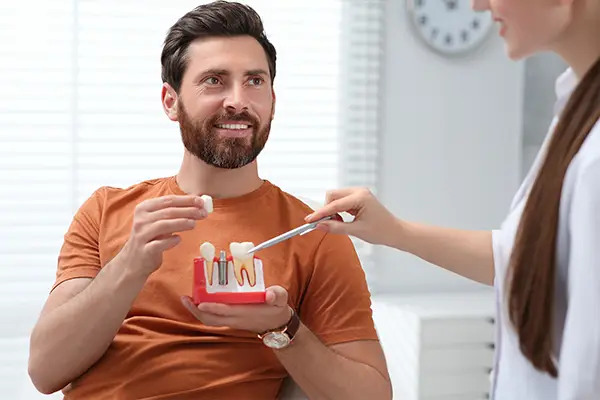
When a gap is left unfilled, the distribution of force during chewing shifts. Remaining teeth compensate by absorbing more pressure, which can lead to wear, cracking, or fractures over time. Jaw joints and surrounding muscles adapt as well, sometimes in ways that contribute to soreness or dysfunction. An implant restores the balance. Force is distributed the way it was designed to be, and the remaining teeth are no longer compensating for a gap that shouldn't be there. Durability That Works With Your BodyUnlike bridges or dentures, which typically need replacement or adjustment over time, a well-maintained implant is built to last. Once the post is integrated with the bone, the structure is stable. The crown can be replaced if needed after many years of use, but the underlying post holds. Patients often keep their implants for decades with routine care. Let's Talk About What's Right for YouDental implants aren't the right answer for every patient or every situation. Candidacy depends on bone density, overall health, and other factors we evaluate carefully. But for patients who are good candidates, implants address the problem at the source in a way that no other option does. If you have a missing tooth or have been managing with a restoration that isn't meeting your expectations, we encourage you to come in to The Strongsville Center for Cosmetic & Implant Dentistry for a consultation. We'll review your records, answer your questions, and give you a clear picture of what implant treatment would look like in your specific case. Call us today at (440) 580-1028. |

Contact Information11925 Pearl Rd #206 Strongsville, OH 44136-3343 (440) 580-1028 info@drweiser.com Follow Us |
